
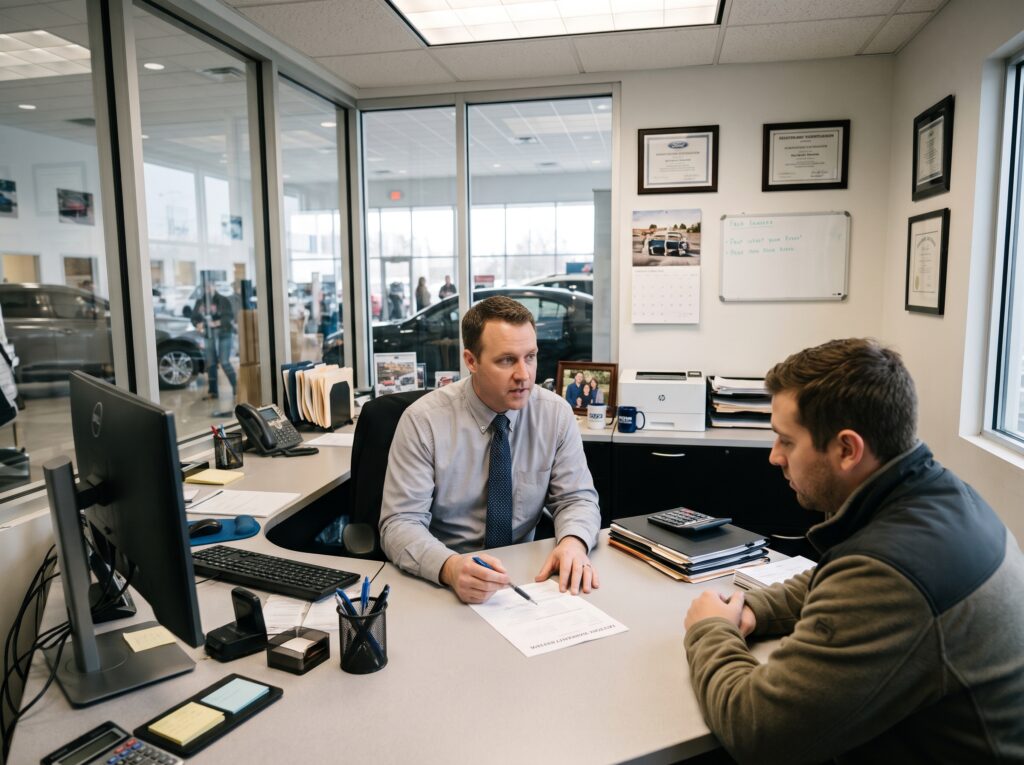
What is a factory warranty review in F&I?
A factory warranty review is a short, visual walk-through of the coverage the manufacturer already provides, done before the F&I manager presents any additional protection. It helps the customer understand basic versus powertrain coverage, how time and mileage limits fit the way they drive, and what the warranty doesn’t cover, so every decision that follows is an informed one.
Ask a customer what their factory warranty covers and you’ll usually get a number. “Three years, 36,000 miles.” Maybe “five and sixty on the powertrain.”
Ask what that number actually means, and the room gets quiet.
Do they know basic and powertrain coverage end at different times? What happens to the rest of the vehicle when the basic warranty runs out? What isn’t covered at all? What’s still their responsibility?
Most don’t know. That’s not their fault. Warranty details are spread across booklets most people never open.
That’s why we teach F&I managers to conduct a factory warranty review before presenting anything else. It isn’t a sales pitch. It’s customer education. Help the customer understand what the manufacturer provides, show them where the limits are, and answer their questions. Then move to the menu.
Here’s how to do it.
1. Start With Accurate Warranty Information
Never explain a factory warranty from memory.
Coverage changes by manufacturer, model, model year, component, and whether the vehicle is new, used, or certified pre-owned. Verify the warranty that applies to this vehicle before the customer sits down.
One resource we use in our training is AutoConsumerInfo.com, a free site for consumers and F&I professionals. It organizes manufacturer warranty information in one place, so you and the customer can look at each level of coverage together instead of digging through an owner’s manual.
You don’t need to memorize every manufacturer’s warranty. You need to know where to find accurate information and how to explain it.
2. Show It. Don’t Just Say It.
A factory warranty review should be visual.
Pull up the coverage and turn the screen toward the customer. Walk through each level instead of reciting years and miles from across the desk.
Depending on the vehicle, that can include basic or comprehensive coverage, powertrain, emissions, corrosion, roadside assistance, and hybrid or EV components.
You’re not running warranty school. Stick to what applies to the vehicle in front of them.
3. Explain the Difference Between Basic and Powertrain Coverage
This is the one customers misunderstand most.
They hear “100,000-mile powertrain warranty” and assume the whole vehicle is covered that long. It isn’t.
Explain what the basic warranty covers and when it ends. Then explain what the powertrain warranty covers and when it ends. Let them see the gap between the two.
The goal isn’t to make the factory warranty sound weak. It’s to make sure the customer knows the difference.
4. Make Time and Mileage Personal
Most warranties end at a time or mileage limit, whichever comes first. Quoting the numbers isn’t enough. Make them mean something.
“How many miles do you usually drive in a year?”
“How long do you typically keep a vehicle?”
A customer driving 25,000 miles a year will pass a 36,000-mile limit before the vehicle’s second birthday. A customer driving 7,500 miles may never reach the mileage limit at all. Someone who trades every three years owns a vehicle very differently from someone who keeps it for ten.
Now you’re not just explaining warranty terms. You’re explaining what those terms mean for this customer.
5. Use T.I.M.E. to Cover the Limitations
Knowing what’s covered matters. Knowing what isn’t matters just as much. Always confirm the manufacturer’s specific terms before explaining any exclusion.
We teach F&I managers a simple acronym for the areas customers misunderstand most: T.I.M.E.
- Tires: Tires may carry their own manufacturer warranty for defects, but road-hazard damage isn’t a defect.
- Inconvenience: Even when a repair is covered, your time, a rental car, and lost or damaged key fobs usually aren’t.
- Maintenance: Required maintenance is the owner’s responsibility. Customers should follow the manufacturer’s schedule and keep their records.
- Environmental: Damage from outside causes such as a rock through the windshield, road debris, hail, tree sap, bird droppings, or road salt isn’t a defect in materials or workmanship.
6. Make It a Conversation
A warranty review shouldn’t sound like a speech. Ask questions as you go.
“Have you ever had a repair you thought would be covered, and it wasn’t?”
That one question tells you a lot. It also turns the customer from a spectator into a participant. When they’re talking, they’re engaged.
7. Keep the Purpose Honest
The factory warranty review isn’t there to scare anyone into a vehicle service contract.
Don’t exaggerate repair costs. Don’t suggest a breakdown is right around the corner. Don’t run down the manufacturer’s warranty to make another product look better.
Explain the coverage accurately and answer their questions. Customers can tell when you’re educating them and when you’re setting them up. Trust is worth more than any clever transition.
8. Transition Naturally to the Menu
Once the review is done, the customer knows what protection came with the vehicle. Now you can present the dealership’s options and explain how each one might fit alongside the manufacturer’s coverage.
At Reahard & Associates, we teach F&I professionals to present 100% of the products to 100% of the customers 100% of the time. The factory warranty review gives that conversation a factual starting point. If your menu itself needs work, our custom menu service can help.
Try this tomorrow: Before your next deal, look up that vehicle’s warranty and have it on screen when the customer sits down. Then ask the mileage question before you say a word about coverage.
Frequently Asked Questions
How long should a factory warranty review take?
Usually just a few minutes. It doesn’t need to be long. It needs to be accurate, visual, and interactive, and it should happen on every deal.
What’s the difference between basic and powertrain warranty coverage?
Basic coverage, often called bumper-to-bumper, covers most of the vehicle against defects for a shorter term. Powertrain coverage is limited to the engine, transmission, and drive components, and usually lasts longer. Terms vary by manufacturer, so always check the specific vehicle.
Does a factory warranty cover maintenance or tires?
Routine maintenance is the owner’s responsibility under virtually every factory warranty. Tires are often covered by the tire manufacturer for defects, but damage from road hazards generally isn’t covered by either warranty.
Should the warranty review come before or after the menu?
Before. Customers can’t judge whether additional protection makes sense until they understand what they already have.
Where can I look up a vehicle’s factory warranty?
Start with the manufacturer’s warranty booklet or website. AutoConsumerInfo.com is a free site that organizes manufacturer warranty information so it’s easier to review with a customer.
Part of the Presentation, Not a Speed Bump
A factory warranty review doesn’t need to take ten minutes. It does need to be accurate, visual, interactive, and consistent.
Use reliable information. Show customers their coverage. Explain the levels and the limits. Ask questions. Make sure they understand what they already have before you ask them to consider anything more.
Done right, the warranty review isn’t something you rush through to get to the presentation. It is part of the presentation. And when customers understand what they already have, they’re in a much better position to decide what, if anything, they want to add.
Like any skill in the business office, it sticks with practice and coaching. That’s what our F&I classes and in-dealership training are built around. If you’d like help making it part of your team’s process, connect with our team.
And remember, it’s a beautiful day … to help a customer!
Justin B. Gasman is a senior training consultant with Reahard & Associates. His father was an F&I manager, and he began his own career in 2003. He won F&I and Showroom’s F&Idol contest and helped his dealership earn F&I Pacesetter status. He is AFIP Master certified and ACE certified.